Website Tips for Cleaning Companies
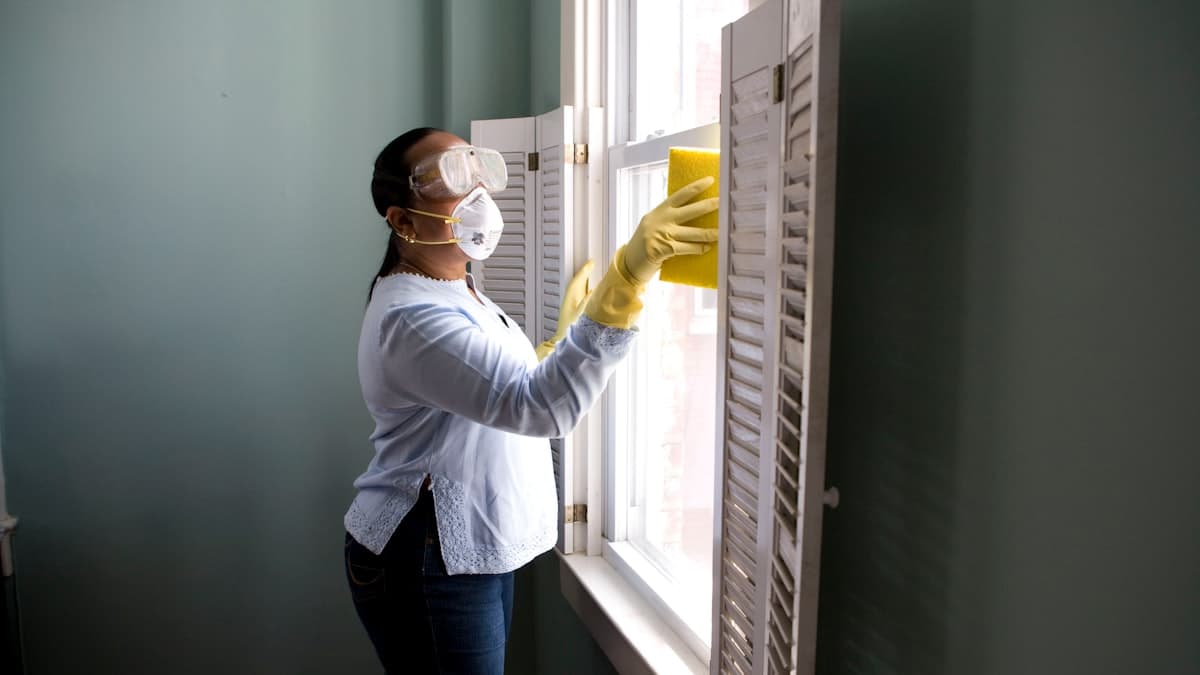
A homeowner decides they need a house cleaner. They search Google, find three cleaning companies, and open all three websites. The first site has no photos, a generic description, and a contact form buried three clicks deep. The second site shows real photos of clean homes, displays pricing transparently, has dozens of five-star reviews, and lets them book an estimate right from the homepage. The third site will not even load on their phone. The homeowner books with the second company without ever looking back.
This scenario repeats itself every day in every market. The cleaning companies winning online are not necessarily the biggest or cheapest. They are the ones whose websites do the best job of building trust, communicating value, and making it easy to take the next step. Whether you run a solo cleaning operation or manage a team of 20, these website strategies will help you stand out in your local market and book more jobs consistently.
Why Trust Matters More for Cleaning Companies
Cleaning is a deeply personal service. You are asking people to let strangers into their homes, often when they are not there. You will have access to their belongings, their private spaces, and their families' living areas. This creates a level of anxiety that does not exist when someone hires, say, a graphic designer or an accountant.
Homeowners are screening you before you screen them. Your website is an interview. Visitors are looking for signals that you are trustworthy, professional, and reliable. If your site feels amateur, incomplete, or evasive about important details, potential customers will move on to a competitor who presents themselves more professionally.
Online reviews carry enormous weight. For cleaning companies, review quality and quantity are arguably the most important trust factors. A cleaning company with 150 five-star reviews and detailed testimonials will book more jobs than a competitor with a better website but only 10 reviews. Your website needs to showcase these reviews prominently.
Background checks and insurance are decision factors. Homeowners want to know that your team members have been vetted and that your company carries liability insurance. These details belong on your homepage, not buried in a FAQ page that nobody reads.
If you are building your cleaning company website from scratch, start with the complete guide to building a small business website for the foundational decisions around platform, hosting, and structure.
Designing a Homepage That Books Cleaning Jobs
Your homepage is the front door of your business. Most visitors will see it first, and many will make their decision to call you (or leave) based on what they see in the first few seconds. Every element on your homepage should work toward one goal: getting the visitor to request an estimate or book a cleaning.
State what you do and where you do it immediately. Your headline should not say "Welcome to Sparkle Clean." It should say "Professional House Cleaning in Denver and the Front Range" or "Trusted Residential Cleaning for Austin Homeowners." Combine your service with your location in the first thing visitors read.
Show a real photo of your team. Stock photos of women in aprons holding feather dusters do not build trust. A real photo of your actual team, wearing your branded shirts, standing in front of your company vehicle, or working in a real home with permission, communicates authenticity. People hire people, not stock images.
Display your booking or estimate CTA prominently. Whether you want people to call, fill out a form, or use an online booking tool, make that action impossible to miss. A button that says "Get Your Free Estimate" or "Book Your First Cleaning" should be visible within the first screen of content on both desktop and mobile.
Feature your best reviews immediately. Place three to five of your strongest reviews on the homepage, ideally with the reviewer's first name and star rating. Choose reviews that mention specific details: "They cleaned behind the stove and under the couch cushions. I have never had a cleaning company be this thorough" is far more persuasive than "Good job."
List your trust credentials. Insured, bonded, background-checked employees, years in business, number of homes cleaned, and any certifications. Present these as a horizontal bar of trust badges or a simple text line near the top of the page. "Fully Insured | Background-Checked Team | 3,000+ Homes Cleaned Since 2018" covers the basics in one line.
Creating Service Pages That Attract the Right Customers
A single "Services" page that lists everything in bullet points will not rank in search engines and will not convert visitors effectively. Individual service pages give you the space to explain what each service includes, who it is for, and why someone should choose your company.
Separate residential and commercial cleaning. These are different audiences with different needs. A homeowner looking for weekly house cleaning does not want to read about office building janitorial services. Create distinct pages (or sections of your site) for each audience.
Create pages for specific service types. Deep cleaning, move-in/move-out cleaning, recurring weekly or biweekly service, one-time cleaning, post-construction cleaning, and Airbnb/vacation rental turnover cleaning all deserve their own pages. Each page targets different search queries and attracts visitors with specific intent.
Describe what each service includes. Homeowners want to know exactly what happens during a cleaning. A detailed checklist for your standard cleaning (vacuum all rooms, mop hard floors, clean and sanitize bathrooms, wipe kitchen counters, dust surfaces, empty trash) sets expectations and justifies your pricing. Differentiate between standard and deep cleaning by listing what the deep clean adds.
Include pricing guidance. You do not need to list exact prices (since square footage, condition, and frequency affect the total), but providing ranges helps qualify visitors. "Standard house cleaning starts at $150 for homes up to 1,500 square feet" is enough to attract the right customers and filter out those who expect to pay $50 for a full home cleaning.
Add location-specific details. If you serve multiple cities or neighborhoods, mention them by name. "We provide house cleaning services throughout Denver, including Wash Park, Capitol Hill, Cherry Creek, Highlands, and Stapleton" helps with local search and confirms your service area.
Building a Testimonial and Review Strategy
Reviews and testimonials are the single most powerful trust-building tool for cleaning companies. Most homeowners will read multiple reviews before booking, and the quality and recency of those reviews heavily influence their decision.
Create a dedicated testimonials page. Collect your best reviews from Google, Yelp, and direct customer feedback, and display them on a dedicated page with the reviewer's name (first name and last initial), their neighborhood or city, and the specific service they received. A well-designed testimonial page builds trust more effectively than any other single page on your site.
Embed Google reviews on your site. Use a widget or plugin that pulls your Google reviews directly onto your website. This provides social proof while showing visitors that your reviews are real, verified, and on a platform they trust. The live connection also means new reviews appear automatically.
Request reviews systematically. After every cleaning, send a follow-up message (text or email) thanking the customer and including a direct link to your Google review page. Make the process as easy as possible by providing the exact link rather than asking customers to search for your business. Check out our guide on how to get more Google reviews for specific strategies.
Respond to every review. Positive reviews deserve a thank-you that mentions something specific about the job. Negative reviews require a professional, empathetic response that addresses the concern and offers a resolution. Future customers read your responses to negative reviews very carefully because they reveal how you handle problems.
Use before-and-after photos as visual testimonials. With client permission, photograph the results of deep cleans, move-out cleans, and other dramatic transformations. These visual testimonials are more convincing than text alone and perform exceptionally well on social media and your website.
Pricing Pages: Transparency That Converts
Pricing is one of the most searched topics for cleaning companies, and it is one of the most debated topics among cleaning business owners. Should you show your prices online or keep them private until you can give a custom quote? The data strongly supports transparency.
Visitors who see pricing stay longer and convert more often. When someone lands on your site looking for cleaning prices and cannot find them, they leave and find a competitor who does show prices. You do not need to show exact prices for every scenario, but you should provide enough information for visitors to self-qualify.
Use a pricing range or starting-at format. "Standard House Cleaning: Starting at $150" or "Deep Cleaning: $200 to $400 depending on home size" gives visitors a realistic expectation without committing you to a fixed rate before you have seen the home.
Explain what affects the price. Square footage, number of bedrooms and bathrooms, current condition of the home, presence of pets, and frequency of service all influence pricing. Listing these factors educates the visitor and justifies the variation in your quotes.
Highlight the value of recurring service. If you offer discounted rates for weekly or biweekly clients, show the savings prominently. "Save 15% with Weekly Service" incentivizes the commitment that provides steady, predictable revenue for your business.
Include a simple pricing calculator or instant quote form. Even a basic form that asks for square footage, number of rooms, and service type can generate a ballpark estimate that keeps visitors engaged. The form itself is a lead capture tool because you collect their contact information in exchange for the estimate.
Booking and Contact: Removing Every Barrier
The moment a visitor decides they want to hire you, every extra click, every unnecessary form field, and every confusing step is a chance for them to change their mind. Your booking and contact process should be the simplest thing on your website.
Offer multiple contact methods. Some people want to call. Some want to text. Some want to fill out a form. Some want to book online without talking to anyone. Offer all of these options and let the visitor choose their preferred method.
Make your phone number clickable on mobile. This sounds basic, but a surprising number of cleaning company websites display phone numbers as images or non-clickable text. On mobile, tapping the phone number should immediately initiate a call.
Keep contact forms short. Name, phone number, email, home address (or zip code), and a brief description of what they need. That is it. You can gather detailed information about their home during the estimate call. Long forms with 15 fields kill conversion rates.
If you use online booking, make it prominent. If you offer instant online booking through a scheduling tool, place the booking widget or link on your homepage, service pages, and navigation menu. Online booking appeals to the growing number of consumers who prefer to schedule services without a phone call.
Set response time expectations. "We respond to all inquiries within 2 hours during business hours" tells the visitor what to expect and holds your team accountable. Slow responses are one of the biggest reasons cleaning companies lose potential customers.
Optimizing for Local Search
Local SEO determines whether your website appears when people in your area search for cleaning services. Without it, your beautiful website sits invisible while competitors with better local optimization get all the traffic.
Optimize your Google Business Profile. Your profile is the gateway to appearing in the map pack results that dominate local searches. Complete every section: business name, address, phone number, website, hours, service area, categories (House Cleaning Service, Commercial Cleaning Service), photos, and posts. Update it regularly with new photos and posts.
Create location-specific pages if you serve multiple areas. If you clean homes in Denver, Boulder, and Lakewood, create separate pages for each city. Each page should include location-specific content, service details, and customer reviews from that area. This approach helps you rank in multiple markets rather than just your primary city.
Build local citations consistently. List your business on Yelp, Angi, Thumbtack, HomeAdvisor, BBB, and local directories with consistent Name, Address, and Phone information everywhere. Inconsistent information across directories confuses search engines and hurts your rankings.
Create content that targets local cleaning searches. Blog posts like "Spring Cleaning Tips for Denver Homeowners" or "How to Prepare Your Austin Home for a Deep Clean" target local search queries while demonstrating your expertise. This content also gives you material to share on social media and in email newsletters.
Earn backlinks from local sources. Partner with real estate agents, property managers, and other local businesses who might link to your website. Sponsor local events and get listed on their websites. Join your local Chamber of Commerce. Each local backlink strengthens your authority in your geographic area.
Photography That Sells Your Cleaning Services
The visual presentation of your website matters enormously for cleaning companies. Clean homes are visual by nature, and your photos should make visitors think "I want my home to look like that."
Invest in professional photos of clean homes. After completing a deep clean or a move-out clean (with client permission), take photos of the results. Focus on kitchens, bathrooms, and living areas since these are the rooms homeowners care about most. Good lighting and clean angles make a significant difference.
Show your team at work. Photos of your team members cleaning, wearing branded uniforms, and using professional equipment humanize your business. Visitors see real people, not a faceless company.
Use consistent image styling. Apply the same brightness, contrast, and framing to all photos so your website looks cohesive rather than like a collection of random snapshots. Consistent visual presentation signals professionalism.
Avoid stock photos entirely. Generic stock photos of cleaning supplies or women in aprons are instantly recognizable as fake. They undermine the trust you are trying to build. Real photos of your work, your team, and your results are always more effective, even if they are not professionally shot.
Optimize images for page speed. Large, uncompressed photos slow your site down and hurt both user experience and search rankings. Resize images to the dimensions you actually display them at and compress them to reduce file size without visible quality loss.
Mobile Optimization for On-the-Go Bookings
Most people searching for cleaning services are on their phones. They might be at work, in the car, or walking through their messy house frustrated enough to finally hire help. Your mobile experience needs to be flawless.
Test your site on actual phones. Load every page on both an iPhone and an Android device. Fill out your forms, tap your phone number, and try to book a cleaning. Any friction you experience is friction your potential customers experience.
Prioritize speed. Mobile users are impatient. If your site takes more than three seconds to load, a significant percentage of visitors will leave. Compress images, reduce the number of scripts, and choose a hosting provider that delivers fast load times.
Make buttons and links thumb-friendly. Tap targets should be at least 44 pixels in each dimension with enough spacing to prevent accidental taps. A row of tiny links at the bottom of a page is useless on mobile.
Simplify mobile navigation. A clean hamburger menu with five to seven items is enough. Home, Services, Pricing, About, Reviews, and Contact cover everything a visitor needs to find. Complex dropdown menus with 20 sub-items do not work on small screens.
Keep the phone number and booking CTA visible. On mobile, a sticky header or floating button that provides instant access to calling or booking ensures that no matter how far someone scrolls, they can always take action.
Tracking Results and Improving Over Time
Your website is not a set-it-and-forget-it project. The cleaning companies that generate the most leads from their websites are the ones that measure performance and make improvements based on data.
Install Google Analytics. Track how many people visit your site, which pages they view, where they come from, and how long they stay. Pay special attention to your most important pages: the homepage, service pages, pricing page, and contact page.
Track phone calls and form submissions. Use a call tracking service that assigns a unique number to your website, so you know exactly how many calls come from your online presence. Track form submissions separately to understand the total volume of leads your site generates.
Monitor your Google Business Profile insights. Google tells you how many people found your profile, how many clicked to your website, how many requested directions, and how many called you directly. These metrics show how your local search presence is performing.
Test and refine. Change your headline, move your CTA, add a new testimonial, or adjust your pricing page, and watch what happens to your conversion rate. Small improvements compound over time. A 10% increase in conversion rate from your homepage means 10% more estimates booked from the same amount of traffic.
Keep content fresh. Add new reviews to your website monthly. Post new before-and-after photos. Update your service descriptions and pricing. Write a blog post about seasonal cleaning topics. Fresh content signals to search engines that your site is active and maintained, which helps your rankings.
Your cleaning company website is your hardest-working employee. It shows up every day, talks to every potential customer, and never takes a sick day. The investment you make in building it well and maintaining it consistently will pay dividends for as long as your business operates.