Mobile-First Website Design Principles for Small Businesses
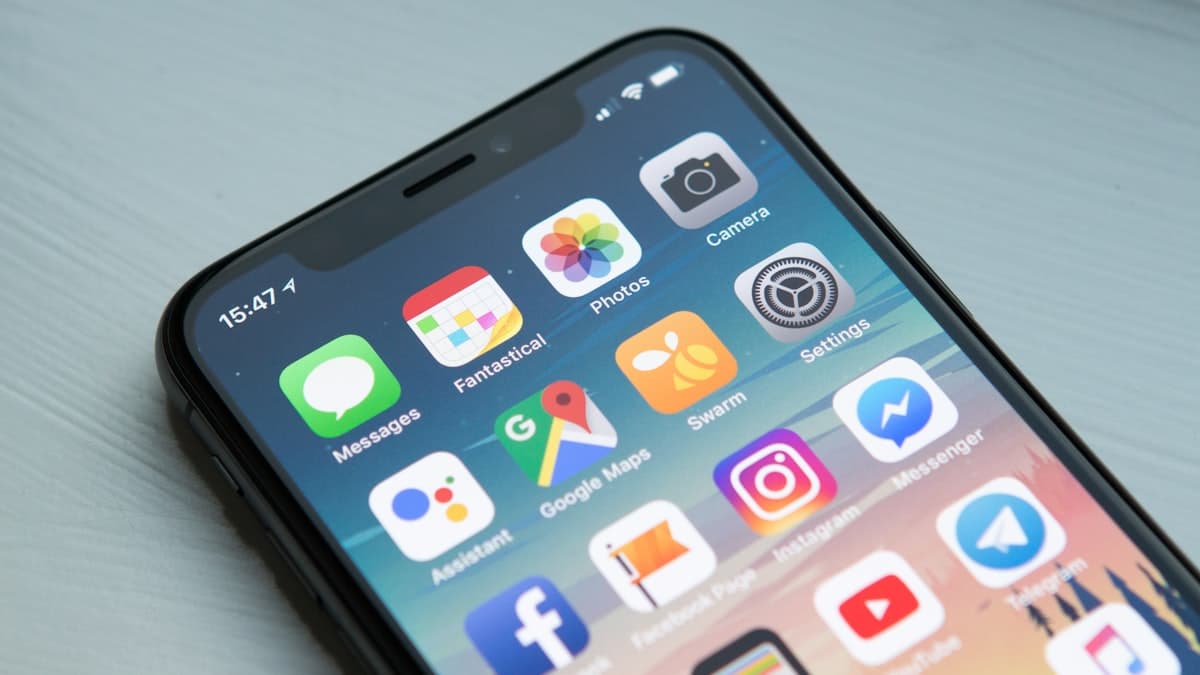
Most small business websites are designed on a large monitor and then squeezed down to fit a phone screen. The result is a mobile experience that feels like an afterthought, because it is one. Text that is too small to read, buttons that are too close together to tap accurately, images that take forever to load, and navigation that requires a magnifying glass to use. Your customers notice, even if they never tell you directly. They just leave.
Mobile-first design flips this approach entirely. Instead of designing for desktop and adapting down, you design for the smallest screen first and then expand up. This forces you to prioritize what truly matters, strip away unnecessary complexity, and create an experience that works beautifully on the device most of your visitors are actually using.
If more than half of your website traffic comes from phones (and for most small businesses, it does), mobile-first design is not a trend you can afford to ignore. It is the foundation of a website that actually works for your customers.
What Mobile-First Design Actually Means
Mobile-first design is a philosophy and a practical methodology. It means that every design decision starts with the mobile experience and then progressively enhances for larger screens.
This is fundamentally different from responsive design, although the two are related. Responsive design ensures your website adapts to different screen sizes. Mobile-first design dictates that you start the design process with the smallest screen and build up from there. Responsive design is a technique. Mobile-first is a strategy.
Here is what changes when you adopt a mobile-first approach:
Content hierarchy becomes mandatory. On a phone screen, you cannot show everything at once. You must decide what is most important and present it first. This decision-making process forces clarity that benefits every version of your site.
Simplicity becomes the default. When you start with a 375-pixel-wide canvas, there is no room for decorative elements that do not serve a purpose. Every element must earn its place on the screen.
Performance is prioritized from the start. Mobile-first design naturally leads to lighter pages because you build the baseline experience for mobile networks and mobile processing power. Desktop enhancements are added on top of an already-fast foundation.
Touch interaction is the primary input. Designing for fingers first means larger tap targets, more spacing between interactive elements, and navigation patterns that work with one-handed use.
Principle 1: Content Priority and Hierarchy
The most important mobile-first principle is ruthless prioritization of content. A desktop screen can display a hero image, a headline, a subheadline, three feature columns, a testimonial slider, and a call-to-action button all above the fold. A mobile screen can show maybe two or three of those elements.
Identify Your Most Important Content
For each page on your website, ask: if a visitor could only see one thing, what should it be? On your homepage, it might be your value proposition and a call to action. On a service page, it might be a description of the service and a way to contact you. On a product page, it might be the product image and the "Add to Cart" button.
Start your mobile layout with that single most important element, then add secondary content below it in order of priority.
Use Progressive Disclosure
Instead of cramming everything onto the screen at once, reveal information progressively. Collapsible sections, "Read More" links, and tabbed content let you present a clean initial view while making additional detail available to visitors who want it.
This is not about hiding content. It is about presenting it in layers. The most critical information is immediately visible. Supporting details are one tap away. Deep details are available for visitors who are specifically looking for them.
Prioritize Action Over Information
Mobile visitors are often more action-oriented than desktop visitors. They want to call your business, find your address, check your hours, or make a purchase. Design your mobile layout so that these actions are immediately accessible, with supporting information organized around them.
Principle 2: Touch-Friendly Interface Design
Mobile users interact with your website using their fingers, primarily their thumbs. This fundamental difference from mouse-based interaction should influence every design decision.
Size Tap Targets Generously
The minimum recommended tap target size is 44 x 44 CSS pixels (Apple's guideline) or 48 x 48 density-independent pixels (Google's guideline). But these are minimums. For primary action buttons (call to action, add to cart, submit form), go larger. A button that is 48 pixels tall and full-width is much easier to tap than a 44-pixel button that is 120 pixels wide.
Space Interactive Elements Apart
Adjacent links, buttons, or clickable elements should have at least 8 pixels of spacing between them. Without adequate spacing, users accidentally tap the wrong element, which creates frustration and erodes trust. This is especially important in navigation menus and lists of links.
Design for the Thumb Zone
When users hold their phone with one hand, their thumb can comfortably reach roughly the bottom two-thirds of the screen. The top corners are the hardest to reach. Place your most important interactive elements (primary buttons, navigation toggles, search) in the easy-to-reach zones.
Provide Visual Feedback
On desktop, hover states tell users that an element is interactive. On mobile, there are no hover states. Provide visual feedback through active states (the button changes color when pressed), animations (a subtle bounce or scale effect), and clear visual affordances (buttons that look like buttons).
Principle 3: Simplified Navigation
Navigation is one of the biggest challenges in mobile design. Desktop sites can display a full navigation bar with dropdown menus. Mobile sites need to compress that same structure into a format that works on a small screen.
The Hamburger Menu: Use It Wisely
The three-line hamburger menu has become the standard mobile navigation pattern. It works, but it comes with a known drawback: hidden navigation gets used less than visible navigation. Items behind the hamburger menu receive fewer visits than items displayed directly on the screen.
For this reason, consider showing your two or three most important navigation items directly on the screen (as a bottom tab bar or abbreviated top nav), with less critical items in the hamburger menu. This hybrid approach keeps the most important pages accessible while containing the full navigation structure.
Bottom Navigation Bars
A navigation bar fixed to the bottom of the screen (like the tab bar in most native apps) is emerging as a best practice for mobile websites. It sits in the natural thumb zone, provides persistent access to key pages, and feels familiar to mobile users who are accustomed to app-style navigation.
Bottom navigation works best when limited to four or five items. Home, services (or products), about, and contact are typical choices for small business websites.
Simplified Menu Structure
Mobile navigation should be flatter than desktop navigation. Deep dropdown hierarchies that work with a mouse cursor are painful on a touchscreen. Reduce your navigation depth to two levels maximum on mobile. If your site structure requires deeper navigation, consider using a search-first approach on mobile.
Search as Navigation
For content-rich websites, a prominent search bar can be more effective than traditional navigation on mobile. Users type what they are looking for and go directly to the right page, bypassing the navigation structure entirely. If your site has more than 20 pages, consider making search a primary navigation mechanism on mobile.
Principle 4: Typography That Works on Small Screens
Text that is perfectly readable on a 27-inch monitor can be unreadable on a 6-inch phone screen. Mobile-first typography requires specific attention to size, spacing, and contrast.
Minimum Body Text Size
Body text should be at least 16 pixels on mobile. Anything smaller causes readability issues for a significant portion of your audience. Many design guidelines recommend 18 pixels as the ideal mobile body text size.
At 16 pixels, most mobile browsers will not auto-zoom when users tap on form fields, which prevents the jarring zoom-and-scroll behavior that disrupts the user experience.
Line Length and Line Height
On a phone screen, text naturally wraps to a shorter line length than on desktop, which is actually better for readability. The ideal line length for comfortable reading is 45 to 75 characters per line. Most phone screens naturally fall within this range at proper font sizes.
Line height (the vertical spacing between lines) should be 1.4 to 1.6 times the font size on mobile. Tighter line height that works on desktop feels cramped on a phone where the text is the primary focus.
Heading Scale
Use a smaller heading scale on mobile than on desktop. A desktop H1 of 48 pixels might scale down to 28 or 32 pixels on mobile. The ratio between heading levels should be consistent, but the absolute sizes should be proportional to the screen.
High Contrast
Mobile devices are used in varying lighting conditions, including bright sunlight. Ensure your text-to-background contrast ratio meets WCAG AA standards (4.5:1 for body text, 3:1 for large text). Dark text on a light background is the safest choice for readability across all conditions.
Principle 5: Performance as a Design Principle
In mobile-first design, performance is not an afterthought. It is a design principle. Every design decision should consider its impact on load time, especially for users on mobile networks.
Set a Performance Budget
Establish a page weight budget (the total size of all files the page loads) before you start designing. A good target for mobile-first pages is under 1 MB for the initial load. This forces designers and developers to make deliberate choices about what to include. A slow website costs you customers and revenue, so treating speed as a design constraint rather than an optimization task yields better results.
Optimize Images Aggressively
Images are typically the heaviest elements on a webpage. For mobile-first design:
- Use modern formats. WebP and AVIF deliver better quality at smaller file sizes than JPEG or PNG.
- Serve appropriate sizes. A 2000-pixel-wide hero image is wasteful on a 375-pixel-wide phone screen. Use responsive images (srcset attribute) to serve the right size for each device.
- Lazy load below-the-fold images. Only load images that are visible in the viewport. Load the rest as the user scrolls down.
- Consider whether you need the image at all. Decorative images that add visual interest on desktop may add nothing on mobile except load time.
Minimize JavaScript
JavaScript is the most expensive resource on mobile in terms of both download time and processing time. Mobile processors are significantly less powerful than desktop processors, so JavaScript that runs smoothly on a laptop may cause lag on a phone. Audit your JavaScript usage and eliminate anything that is not essential for the mobile experience.
Prioritize Critical Rendering Path
Load the resources needed to render the above-the-fold content first. Defer everything else. This means inlining critical CSS, preloading essential fonts, and deferring non-critical JavaScript. The goal is for the user to see a fully rendered page as quickly as possible, even if below-the-fold elements load a moment later.
For detailed techniques on improving your website's loading speed, a comprehensive approach to performance optimization makes a measurable difference in both user experience and search rankings.
Principle 6: Mobile-First Forms
Forms on mobile are notoriously difficult to fill out, and they are where many mobile visitors give up. Mobile-first form design minimizes friction at every step.
Reduce Fields Ruthlessly
Every form field you add reduces completion rates. On mobile, the impact is even more pronounced because each field requires keyboard interaction on a small screen. Ask for the minimum information needed to accomplish the form's purpose. You can always collect additional information later.
Use Appropriate Input Types
HTML input types trigger the right keyboard on mobile devices. Use type="email" for email fields (shows the @ key), type="tel" for phone numbers (shows the numeric keypad), and type="number" for numeric inputs. These small details reduce the effort required to fill out your forms.
Single-Column Layout
Multi-column form layouts that work on desktop break on mobile. Always use a single-column layout for mobile forms. Fields stack vertically, labels sit above their fields, and the submit button spans the full width.
Smart Defaults and Autocomplete
Enable browser autocomplete by using standard field names and autocomplete attributes. Provide sensible defaults where possible (pre-selecting the user's country based on geolocation, defaulting to the most common option in dropdowns). Every keystroke you eliminate improves completion rates.
Principle 7: Test on Real Devices
The final principle is arguably the most important. No emulator, simulator, or browser developer tool can fully replicate the experience of using your website on an actual phone.
Build a Device Testing Library
At minimum, test on a recent iPhone (Safari), a recent Android phone (Chrome), and an older or mid-range Android device. The older device is critical because it represents the experience of users with less powerful hardware, slower processors, and less RAM.
Test in Real Conditions
Test your website on a cellular connection, not just Wi-Fi. Test in bright sunlight to check readability. Test with one hand while walking. Test with wet fingers (yes, this matters for outdoor or food-service businesses). The goal is to experience your website the way your actual customers do.
Use Lighthouse and PageSpeed Insights
Google's Lighthouse tool (built into Chrome DevTools) audits your website for performance, accessibility, best practices, and SEO from a mobile perspective. PageSpeed Insights provides real-world performance data from actual Chrome users. Run both regularly and address any issues they flag.
Gather Real User Feedback
Analytics and testing tools tell you what is happening. Talking to actual users tells you why. Ask a handful of customers to complete a specific task on your mobile site while you observe. The friction points they encounter will often surprise you and reveal problems that no automated tool can detect.
Making the Shift to Mobile-First
Adopting mobile-first design does not mean rebuilding your entire website overnight. Start with your highest-traffic pages, apply these principles, measure the impact, and expand from there. The businesses that commit to mobile-first design consistently see improvements in engagement, conversions, and search rankings.
The core mindset shift is straightforward: stop thinking of mobile as a smaller version of desktop. Mobile is the primary experience, and desktop is the enhanced version. When you design with that perspective, you create websites that work for the majority of your visitors, not the minority.