SMS Marketing for Small Businesses: How to Get Started
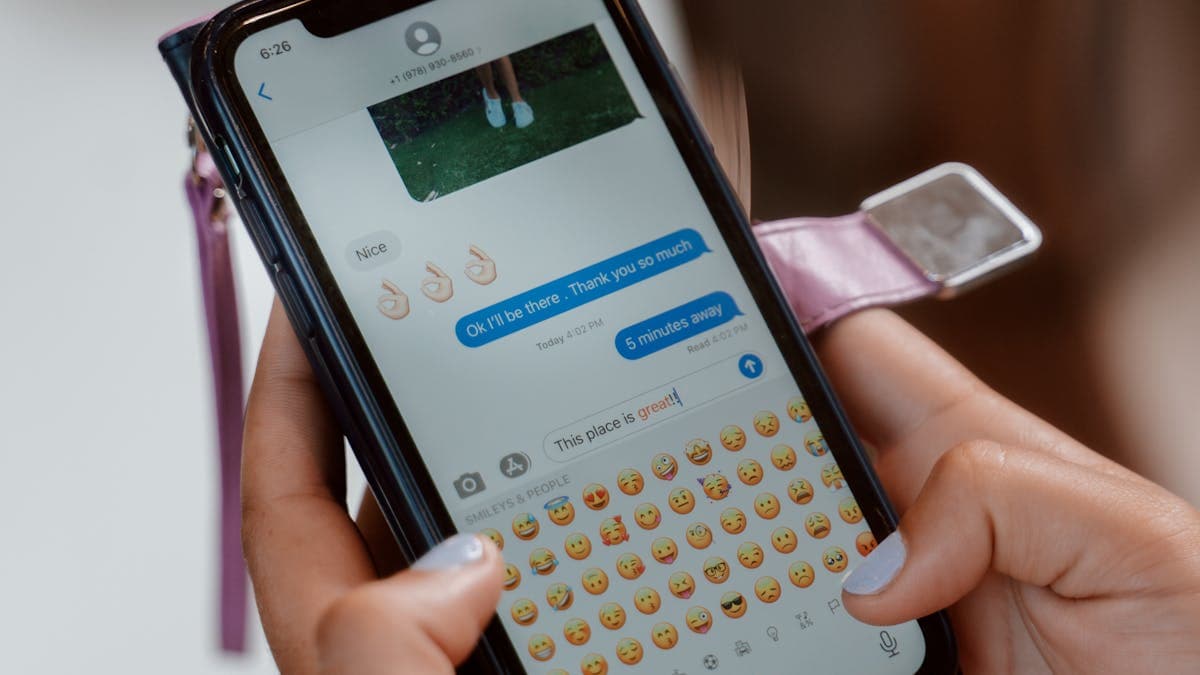
Email marketing has long been the go-to channel for small businesses, and for good reason. But there is another channel that outperforms email on one critical metric: open rates. Text messages have a 98% open rate, compared to roughly 20% for email. Even more striking, 90% of text messages are read within three minutes of delivery. No other marketing channel puts your message in front of customers that quickly or that reliably.
SMS marketing is not about replacing email. It is about adding a direct, immediate channel that works best for time-sensitive messages, reminders, and quick promotions. For small businesses that serve local customers, it can be one of the most effective tools in your marketing toolkit.
Why SMS Marketing Works So Well
The power of SMS comes down to attention. People check their phones constantly, and text messages command immediate attention in a way that emails, social posts, and even push notifications do not.
Near-universal open rates. That 98% open rate is not a typo. Text messages simply get read. Most people have notifications enabled for texts, and the message preview appears right on the lock screen. Compare that to email, where your message might sit in a crowded inbox for hours (or end up in a promotions tab or spam folder).
Speed of engagement. The average response time for a text message is 90 seconds. For email, it is 90 minutes. If you need customers to act quickly (a flash sale, a same-day cancellation opening, a limited-time offer), SMS is the way to reach them.
Simplicity. Text messages are short by nature. You do not need to design a beautiful template, write lengthy copy, or worry about rendering issues across different email clients. A clear, concise message with a call to action is all you need.
Personal connection. Texts feel more personal than marketing emails. They land in the same place where messages from friends and family appear. This proximity creates a sense of direct connection with your business, which builds loyalty when used respectfully.
If you are already doing email marketing, SMS is a natural complement. Our guide on email marketing for small businesses covers building that foundation, and SMS can layer on top of it to create a multi-channel approach.
Compliance Basics: TCPA and Opt-In Requirements
Before you send a single text, you need to understand the legal requirements. SMS marketing is more heavily regulated than email, and the penalties for violations are steep.
The Telephone Consumer Protection Act (TCPA) is the primary law governing text message marketing in the United States. It requires that you obtain explicit written consent before sending marketing texts to anyone. "Written consent" in the digital age typically means a checkbox on a form or a text-to-join keyword where the customer initiates contact.
Key compliance rules you must follow:
- Get explicit opt-in consent. You cannot add someone to your SMS list just because they gave you their phone number for another purpose. They must specifically agree to receive marketing texts from you.
- Clearly identify yourself. Every marketing text should include your business name so recipients know who is messaging them.
- Include opt-out instructions. Every message should tell recipients how to unsubscribe, typically by replying STOP. You must honor opt-out requests immediately.
- Respect quiet hours. Do not send marketing texts before 8 AM or after 9 PM in the recipient's time zone.
- Keep records of consent. Document when and how each subscriber opted in. If challenged, you need proof that consent was given.
Penalties for violations can be $500 to $1,500 per unsolicited text message. Class action lawsuits under the TCPA have resulted in multimillion-dollar settlements. This is not an area to cut corners.
The good news is that reputable SMS marketing platforms handle much of this compliance for you, including opt-in management, opt-out processing, and quiet hours. But the responsibility for obtaining proper consent rests with you.
Choosing an SMS Marketing Platform
Several platforms make SMS marketing accessible and affordable for small businesses. Here are four solid options.
SimpleTexting
SimpleTexting is one of the most popular SMS platforms for small businesses, and it earns that popularity with an intuitive interface and reliable delivery. It supports both one-to-one conversations and mass text campaigns, offers scheduling, automation, and integrations with tools like Mailchimp, HubSpot, and Zapier.
Pricing: Plans start at $39 per month for 500 messages. Additional messages cost around $0.04 to $0.05 each. They also offer a 14-day free trial.
Best for: Businesses that want an easy-to-use platform with strong customer support and straightforward pricing.
EZTexting
EZTexting has been in the SMS marketing space for over a decade and offers a mature, feature-rich platform. It includes tools for keyword campaigns, drip campaigns, contact management, and analytics. Their template library helps you get started quickly.
Pricing: Plans start at $25 per month for 500 messages. Higher tiers offer more messages and features. There is a free trial available.
Best for: Businesses that want a proven platform with a wide range of campaign types and robust reporting.
Twilio
Twilio is different from the others because it is a developer-focused communications platform that powers SMS for thousands of businesses and apps. It is more flexible but also more complex. For small business owners who are not technical, Twilio might be overkill. However, if you have someone on your team who can work with APIs, Twilio offers unmatched flexibility and pay-as-you-go pricing.
Pricing: Pay-as-you-go at roughly $0.0079 per outbound SMS. No monthly fees, but you need to build or configure your own sending tools.
Best for: Tech-savvy business owners or businesses with a developer who can build custom SMS workflows.
SlickText
SlickText rounds out the options with a focus on simplicity and customer experience. It offers text-to-join keywords, automated responses, birthday campaigns, and loyalty programs via SMS. The platform is particularly strong for retail and food service businesses.
Pricing: Plans start at $29 per month for 500 texts. They offer a free plan with limited messages for testing.
Best for: Retail stores, restaurants, and businesses that want to run loyalty and birthday campaigns via text.
Building Your Subscriber List
Growing your SMS list requires a different approach than building an email list. Because text messages feel more personal and people are more protective of their phone numbers, you need to offer clear value in exchange for their number.
Text-to-join keywords are one of the most effective methods. You choose a keyword (like "PIZZA" or "DEALS") and promote it on signage, social media, and your website. Customers text the keyword to your number and are automatically added to your list. This works especially well in physical locations where customers can see your signage.
Website opt-in forms should be simple and transparent. Include a checkbox specifically for SMS consent (separate from email consent) and clearly state what types of messages they will receive and how often. This form can live on your contact page, checkout page, or as a dedicated landing page.
Point of sale. Train your staff to mention the SMS program at checkout. A simple "Would you like to join our text club for exclusive offers?" can steadily grow your list over time.
Social media promotion. Share your text-to-join keyword on Instagram, Facebook, and other platforms. Consider running a promotion where new subscribers get an immediate discount or perk.
Incentivize sign-ups. Offer something tangible in exchange for subscribing: a discount code, a free item, early access to sales, or entry into a giveaway. People need a reason to share their phone number.
A realistic expectation for list building: if you actively promote your SMS program across all channels, a small local business can typically add 50 to 200 subscribers per month. The key is consistency in promoting the program and delivering genuine value once people subscribe.
Types of Messages That Work
Not every message type belongs in an SMS campaign. The best performing SMS marketing messages are short, timely, and actionable.
Flash sales and limited-time offers. "20% off all services today only. Show this text or use code TEXT20 at checkout." The urgency of a flash sale pairs perfectly with the immediacy of text messaging.
Appointment reminders. "Reminder: You have an appointment with [Business Name] tomorrow at 2:00 PM. Reply Y to confirm or call us to reschedule." Appointment reminders alone can justify an SMS program by reducing no-shows, which directly impacts your revenue.
Order and shipping updates. "Your order has shipped! Track it here: [link]." Transactional messages have high engagement and build trust with customers.
Exclusive VIP offers. "You are one of our best customers. Enjoy 25% off your next visit this week." Making subscribers feel like insiders encourages them to stay subscribed and visit more often.
Event announcements. "Join us this Saturday for our grand reopening. Free samples and live music from 12 to 4 PM." Events are inherently time-sensitive, making them ideal for SMS.
Feedback requests. "Thanks for your visit today! We would love your feedback. Rate your experience: [link]." Keeping it short and sending it promptly after a visit increases response rates.
Seasonal and holiday messages. "Happy holidays from [Business Name]! Treat yourself to 15% off this weekend." Timely, relevant, and personal.
Messages that do not work well via SMS include long newsletters, complex information that requires careful reading, and anything that feels like spam. Keep your messages under 160 characters when possible, and never send more than you promised at sign-up.
Measuring Results
Track these metrics to evaluate the performance of your SMS marketing:
Delivery rate measures how many of your messages actually reach subscribers. This should be 95% or higher. Lower rates indicate issues with your list quality (invalid numbers, carrier filtering).
Open rate will naturally be very high (97% to 99%), so it is less useful as a differentiator between campaigns. Focus more on engagement metrics.
Click-through rate (CTR) tracks how many recipients tap a link in your message. Average CTR for SMS marketing is 19% to 36%, significantly higher than email. If your CTR is below 10%, your messages may not be compelling enough or your offers may not be relevant.
Conversion rate measures how many recipients take the desired action (make a purchase, book an appointment, redeem an offer). This is the metric that matters most for your bottom line.
Opt-out rate tells you how many people unsubscribe after each message. A healthy opt-out rate is below 2% per campaign. If it is higher, you may be sending too frequently or your messages may not be relevant to your audience.
Revenue per message helps you calculate the direct ROI of your SMS program. Divide the revenue generated from an SMS campaign by the number of messages sent.
Review these metrics after every campaign, and use the data to refine your approach. Test different message formats, sending times, and offer types to find what resonates most with your audience.
Getting Started Today
Here is a practical action plan to launch your SMS marketing program:
- Choose a platform based on your budget, technical comfort level, and the types of campaigns you want to run.
- Set up your compliance infrastructure: opt-in forms, opt-out keywords, and a consent record system.
- Create your first text-to-join keyword and start promoting it in your physical location, on your website, and on social media.
- Plan your first three campaigns before you send anything. Having a content plan prevents you from going silent after an initial burst.
- Start with a weekly or biweekly sending frequency. You can adjust based on subscriber feedback and opt-out rates.
- Track your results from day one and refine your approach based on what the data tells you.
SMS marketing is not a replacement for a strong website or an email strategy. It is a powerful addition that excels at reaching customers in real time with messages they actually see. For small businesses, that kind of direct line to your customers is incredibly valuable. Start small, deliver genuine value, and let the results speak for themselves.