Social Media Marketing for Small Businesses
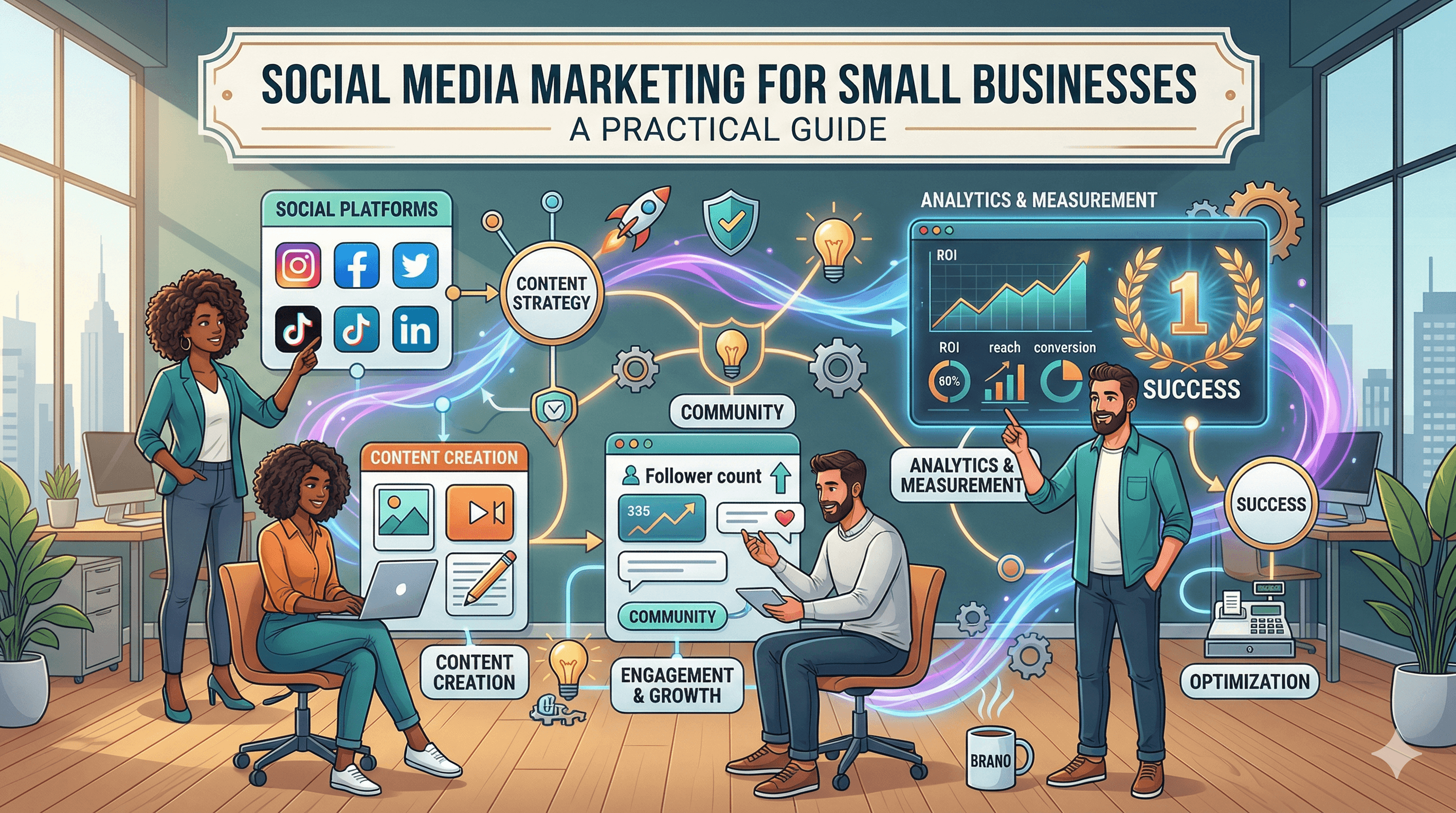
Social media marketing is one of those things that sounds simple until you try to do it well. Posting occasionally on Facebook is not a social media strategy. But spending four hours a day creating TikTok videos when you run a local accounting firm is not a smart use of your time either. The key for small businesses is finding the right balance: choosing the right platforms, creating content that resonates with your audience, posting consistently, and converting that attention into actual business results. This guide gives you a practical, realistic plan for making social media work without it consuming your entire day.
Choosing the Right Platforms
The biggest mistake small businesses make on social media is trying to be everywhere. You do not need a presence on every platform. You need a strong presence on one or two platforms where your target customers actually spend their time.
Facebook remains the largest social media platform with nearly 3 billion monthly active users. It works well for local businesses because of its strong local search features, business pages, and community groups. Facebook is particularly effective for businesses targeting adults aged 30 and older. The platform's advertising tools are also among the most sophisticated available, allowing precise targeting by location, demographics, interests, and behaviors.
Best for: Local businesses, service-based businesses, restaurants, retail shops, and any business targeting adults 30+.
Instagram is a visual platform, which makes it ideal for businesses with photogenic products, services, or results. Restaurants, salons, fitness studios, home improvement companies, and retail stores thrive on Instagram. The platform skews slightly younger than Facebook (primary audience 18 to 44) and emphasizes visual storytelling through photos, Reels (short videos), and Stories (ephemeral content that disappears after 24 hours).
Best for: Visually oriented businesses, lifestyle brands, food and beverage, beauty, fitness, home improvement, and retail.
LinkedIn is the professional networking platform, making it the clear choice for B2B businesses, professional service firms, consultants, and recruiters. Content on LinkedIn tends to be educational, thought-leadership oriented, and industry-specific. Organic reach on LinkedIn is still relatively strong compared to Facebook, making it a valuable platform for businesses willing to create substantive content.
Best for: B2B companies, consultants, agencies, SaaS businesses, professional services (accountants, lawyers, financial advisors).
TikTok
TikTok has evolved beyond dance videos into a legitimate marketing channel for businesses. Its algorithm is uniquely powerful at distributing content to new audiences, which means even accounts with zero followers can have a video seen by thousands. TikTok works best for businesses willing to create authentic, entertaining, or educational short-form video content.
Best for: Businesses targeting audiences under 40, businesses with visual processes (cooking, crafting, cleaning, renovation), and any business willing to invest in video content. TikTok also functions as a search engine for younger users, which creates unique opportunities. Our guide on TikTok SEO for small businesses explains how to optimize your content for discovery on the platform.
X (Formerly Twitter)
X is a text-first platform focused on real-time conversation. It works well for businesses in news, technology, media, and any industry where timely commentary matters. However, for most local small businesses, X is not a priority platform.
Best for: Tech companies, media, public figures, businesses that benefit from real-time engagement.
How to Decide
Ask yourself three questions. First, where does your target customer spend time on social media? If you are unsure, ask your existing customers directly. Second, what type of content can you realistically create? If you hate being on camera, TikTok may not be sustainable. Third, which platform aligns with your business type? Match your business to the recommendations above.
Choose one primary platform and, at most, one secondary platform. Master those before considering expansion. If you are still deciding whether social media is the right investment for your business, our article on whether your small business needs social media lays out the honest pros, cons, and situations where it makes the biggest difference.
Content Planning and Posting Frequency
Consistency matters more than frequency. Posting three times a week every week is far more effective than posting daily for two weeks and then going silent for a month.
Recommended Posting Frequency
For most small businesses, here is a realistic and effective posting schedule. Facebook: 3 to 5 posts per week. Instagram: 3 to 5 feed posts per week, plus 3 to 5 Stories per week. LinkedIn: 2 to 4 posts per week. TikTok: 3 to 5 videos per week.
These are guidelines, not rules. If you can only manage two posts per week consistently, that is better than an ambitious schedule you cannot maintain. The algorithm on every platform rewards consistency.
Content Types That Work
Effective social media content for small businesses generally falls into a few categories.
Educational content teaches your audience something useful related to your industry. A plumber sharing a video on how to prevent frozen pipes in winter, an accountant explaining common tax deduction mistakes, or a bakery sharing a decorating technique. Educational content builds authority and trust. This type of content pairs well with a broader content marketing plan that includes blog posts and guides.
Behind-the-scenes content shows the human side of your business. Photos of your team, time-lapses of your work process, or stories about how your business started. People connect with people, not logos. This type of content builds emotional connection and loyalty.
Social proof content highlights customer results, reviews, testimonials, and case studies. Share screenshots of positive reviews (with permission), before-and-after photos, or customer success stories. Social proof is one of the most powerful persuasion tools available.
Promotional content directly promotes your products or services. This should make up no more than 20% of your total content. If every post is a sales pitch, people will tune out. The 80/20 rule works well: 80% value-driven content, 20% promotional.
Engagement content asks questions, runs polls, or invites comments. "What is your biggest challenge with [topic]?" or "Which do you prefer, A or B?" These posts boost engagement, which signals to the algorithm that your content is worth showing to more people.
Creating a Content Calendar
Batch your content creation. Set aside two to three hours once a week (or once every two weeks) to create all your content in advance. Use a simple spreadsheet or a tool like Trello or Notion to plan your posts.
For each post, note the date, platform, content type (educational, behind-the-scenes, etc.), the caption or script, the visual asset needed (photo, video, graphic), and any relevant hashtags. Having a plan eliminates the "what should I post today?" anxiety that causes most small businesses to stop posting altogether.
Growing Your Audience Organically
Building a following takes time, but there are strategies that accelerate growth without spending money on ads.
Optimize Your Profile
Your profile is your first impression. Use a clear, recognizable profile photo (your logo or a professional headshot). Write a bio that clearly states who you help and how. Include a link to your website. If your business serves a specific area, mention your location. Make it easy for someone who lands on your profile to understand exactly what you do.
Use Hashtags Strategically
Hashtags help new people discover your content. Research hashtags in your industry and location. Use a mix of popular hashtags (100K+ posts, for broader discovery) and niche hashtags (1K to 50K posts, for more targeted reach). On Instagram, use 5 to 15 relevant hashtags per post. On LinkedIn, use 3 to 5. On TikTok, use 3 to 5 relevant hashtags plus trending hashtags when appropriate.
Engage With Your Community
Social media is social. Spend 10 to 15 minutes per day engaging with other accounts in your industry and local community. Comment thoughtfully on their posts (not just "Great post!"). Respond to every comment and direct message on your own posts. Join and participate in relevant Facebook or LinkedIn groups. This activity increases your visibility and builds genuine relationships. Your Google Business Profile complements your social presence by ensuring you show up in local searches as well.
Collaborate With Complementary Businesses
Partner with non-competing businesses that share your target audience. A wedding photographer might collaborate with a florist, a venue, and a caterer. Cross-promote each other's content, run joint giveaways, or create collaborative content. This exposes each business to the other's audience.
Converting Followers Into Customers
Followers are nice, but they do not pay the bills. Here is how to turn social media attention into actual revenue.
Drive Traffic to Your Website
Your website is where conversions happen. Regularly direct followers to relevant pages on your site: blog posts, product pages, service descriptions, or landing pages with special offers. Use your bio link strategically. Tools like Linktree or a simple landing page let you point followers to multiple destinations from a single link.
Build Your Email List
Social media algorithms change constantly. An engaged email list is an asset you own. Use social media to promote lead magnets (free guides, checklists, discounts) that require an email address to access. Once someone is on your email list, you have a direct, reliable way to reach them regardless of what any social media algorithm does.
Use Clear Calls to Action
Every post should have a purpose, and many should include a clear call to action. "DM us for a free quote," "Click the link in bio to download our free guide," "Comment READY and we will send you the details." Do not assume followers will take the next step on their own. Tell them exactly what to do. Crafting compelling website copy and crafting social media calls to action use many of the same principles.
Leverage Social Selling
Social selling means using social media to identify, connect with, and nurture potential customers. On LinkedIn, this might mean commenting on a prospect's post, sharing relevant content they would find valuable, or sending a personalized connection request. On Instagram, it might mean responding to a Story with a genuine compliment before mentioning your product. The key is building a relationship first, not jumping straight to a pitch.
Managing Social Media in 30 Minutes a Day
Time is the biggest constraint for small business owners. Here is a realistic daily social media routine that takes about 30 minutes.
5 minutes: Check notifications and respond. Reply to comments, direct messages, and mentions. Quick responses show followers you are engaged and attentive.
10 minutes: Engage with others. Comment on 5 to 10 posts from accounts in your industry, local community, or target audience. Genuine engagement builds relationships and visibility.
10 minutes: Post your scheduled content. If you batch-create content weekly, this is simply a matter of publishing what you have already prepared. Review the post, make any timely adjustments, and publish.
5 minutes: Review and plan. Check which recent posts performed well and why. Note ideas for future content. Add any timely topics to your content calendar.
This routine assumes you are spending a separate two to three hour block each week or every other week to batch-create content. That creation time is in addition to the daily 30 minutes.
Tools That Save Time
Several tools make social media management more efficient. Buffer and Hootsuite let you schedule posts across multiple platforms in advance. Canva makes it easy to create professional-looking graphics without design skills. Later specializes in Instagram scheduling with a visual feed planner. ChatGPT or similar AI tools can help brainstorm content ideas and draft captions (though you should always edit for your brand voice). For a detailed comparison of scheduling and analytics platforms, see our best social media management tools for small businesses review.
Most of these tools offer free tiers that are sufficient for small businesses managing one or two platforms.
Measuring What Matters
Do not get distracted by vanity metrics like follower count. Focus on metrics that indicate real business impact: engagement rate (interactions divided by impressions), website traffic from social media, leads generated (email sign-ups, contact form submissions, DMs requesting information), and revenue attributable to social media. If you are trying to set a realistic budget for this channel, our guide on how much social media marketing costs for a small business covers DIY costs, agency fees, and ad spend benchmarks. Your overall digital marketing strategy should include clear goals and metrics for each channel, including social media.
Review your metrics monthly. Identify which content types and topics generate the most engagement and business results, then create more of that content. Social media marketing is an ongoing process of testing, learning, and refining.
Getting Started Today
Pick one platform. Set up or optimize your profile. Create a simple content calendar for the next two weeks. Batch-create that content in one sitting. Start posting consistently and engaging daily for 30 minutes. After 90 days of consistency, evaluate your results and decide whether to continue, adjust your approach, or add a second platform. The businesses that win on social media are not the ones with the biggest budgets or the flashiest content. They are the ones that show up consistently and provide genuine value to their audience.