Local SEO for Small Businesses: A Complete Starter Guide
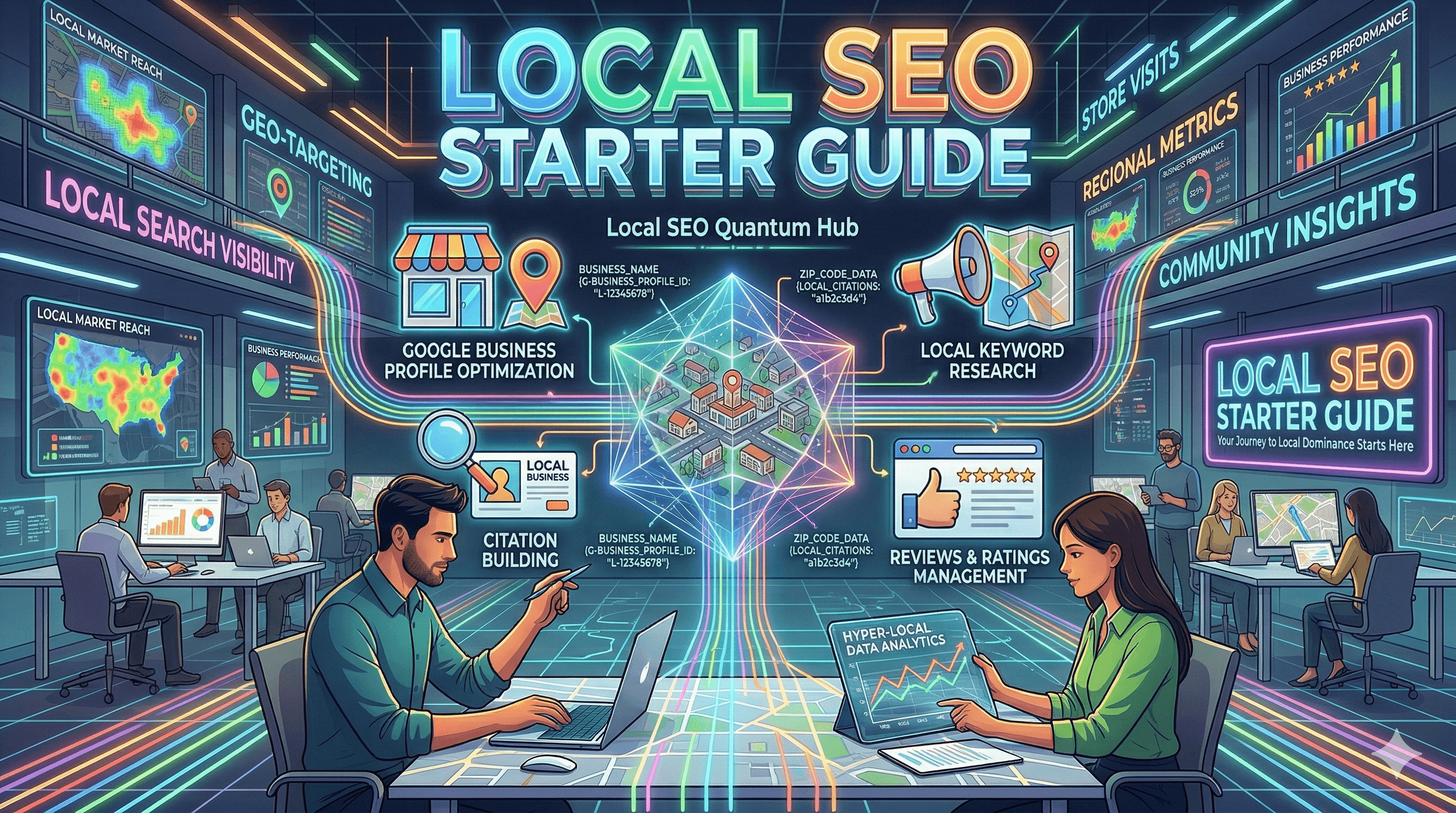
If you run a business that serves customers in a specific area, local SEO is one of the most important investments you can make. Whether you operate a dental practice, a plumbing company, a restaurant, or a retail shop, the way people find local businesses has changed dramatically. Today, the vast majority of customers turn to Google before they ever drive across town. If your business does not show up when someone searches for what you offer in your area, you are handing those customers to your competitors.
This guide will walk you through everything you need to know to get started with local SEO, even if you have zero experience with search engine optimization. For a broader overview of search optimization, our comprehensive SEO guide for small businesses covers the full picture.
What Local SEO Is and How It Differs from Traditional SEO
Traditional SEO focuses on improving your website's visibility in search results on a national or global scale. Local SEO, on the other hand, is specifically about making your business visible to people searching in your geographic area. When someone types "coffee shop near me" or "best plumber in Austin," Google uses a different set of ranking factors to decide which businesses to display.
Local SEO involves optimizing your online presence so that your business appears in location-based searches. This includes your Google Business Profile, local directory listings, customer reviews, and your website's local relevance signals. The goal is simple: when a potential customer in your area searches for the products or services you offer, your business should be one of the first results they see.
The key difference is intent. Someone searching "how to fix a leaky faucet" might be anywhere in the world. But someone searching "plumber near me" or "emergency plumber in Dallas" is ready to hire someone local, and they are often ready to take action immediately. Studies show that 76% of people who search for something nearby on their phone visit a related business within a day. That is the power of local search.
The Local Pack: How Google Decides Which Three Businesses to Show
When you search for a local service on Google, you have probably noticed the map that appears at the top of the results with three businesses listed below it. This is called the "local pack" (sometimes called the "map pack" or "3-pack"), and it is the single most valuable piece of real estate in local search.
Getting your business into the local pack can dramatically increase your visibility, phone calls, and foot traffic. But how does Google decide which three businesses to feature? Google has confirmed that three primary factors determine local pack rankings.
Relevance measures how well your business profile matches what the searcher is looking for. If someone searches for "Italian restaurant," Google wants to show businesses that clearly identify as Italian restaurants, not just generic restaurants that happen to serve pasta.
Distance considers how far each potential search result is from the location used in the search. If someone searches from downtown, Google will favor businesses closer to downtown. You cannot control where people search from, but you can make sure Google knows exactly where your business is located.
Prominence refers to how well known and respected your business is. Google measures prominence through a combination of factors including review count and ratings, the number of quality citations and links pointing to your business, and your overall web presence. This is the factor you have the most control over through ongoing local SEO efforts.
Optimizing Your Google Business Profile
Your Google Business Profile (formerly Google My Business) is the foundation of your local SEO strategy. If you do nothing else on this list, at least claim and optimize your profile. It is free, and it directly impacts whether you appear in the local pack and Google Maps.
Start by claiming your profile at business.google.com if you have not already. Once you have access, the goal is to complete every single field Google offers. Businesses with complete profiles are significantly more likely to be considered reputable by both Google and potential customers.
Business name: Use your real business name exactly as it appears on your signage and legal documents. Do not stuff keywords into your business name (for example, do not change "Mike's Plumbing" to "Mike's Plumbing, Best Emergency Plumber Dallas TX"). Google can and does penalize businesses for this.
Categories: Choose your primary category carefully, as it is the most important category signal for Google. Then add relevant secondary categories. A pizza restaurant might use "Pizza Restaurant" as the primary category and add "Italian Restaurant," "Delivery Restaurant," and "Catering Food and Drink Supplier" as secondary categories.
Address and service area: If you have a physical location customers visit, enter your full address. If you travel to customers (like a mobile mechanic or house cleaner), set your service area instead.
Hours: Keep your hours accurate and up to date, including holiday hours. Inaccurate hours frustrate customers and can lead to negative reviews.
Photos: Add high quality photos of your business, products, team, and interior/exterior. Businesses with photos receive 42% more requests for directions and 35% more clicks to their websites, according to Google. Add new photos regularly to show that your business is active.
Google Posts: Use the Posts feature to share updates, promotions, events, and news. Posts show up directly on your profile and signal to Google that your business is active and engaged.
Products and services: List your products and services with descriptions and prices where applicable. This helps Google understand what you offer and match your business to relevant searches.
NAP Consistency: What It Is and Why It Matters
NAP stands for Name, Address, and Phone Number. NAP consistency means that your business name, address, and phone number are identical everywhere they appear online. This includes your website, Google Business Profile, social media accounts, directory listings, and any other place your business information is published.
Why does this matter so much? Google cross-references your business information across the web to verify that your business is legitimate and that the information is accurate. When Google finds conflicting information (different phone numbers on different directories, a slightly different address format, or an old business name), it loses confidence in your data. That uncertainty can hurt your local rankings.
Here is a common example of inconsistency that trips up small businesses. Your website might list your address as "123 Main Street, Suite 4," while your Yelp listing says "123 Main St., Ste. 4," and your Facebook page says "123 Main Street #4." To a human, these are obviously the same address. But search engines can interpret these as three different locations.
Pick one standard format for your business name, address, and phone number, and use it everywhere. Create a simple document that records this exact information so you (or anyone on your team) can reference it whenever you update or create a new listing.
Local Citations and Directory Listings
A citation is any online mention of your business name, address, and phone number. Citations appear on business directories, social media platforms, review sites, and industry-specific websites. They are one of the key factors Google uses to validate your business information and determine your local prominence.
Start with the major platforms that matter most. These include Google Business Profile, Bing Places for Business, Apple Maps, Yelp, Facebook, and the Better Business Bureau (BBB). After those, look for industry-specific directories relevant to your business. A restaurant should be on TripAdvisor, OpenTable, and Zomato. A home services company should be on Angi, HomeAdvisor, and Thumbtack. A healthcare provider should be on Healthgrades, Zocdoc, and Vitals.
You can build citations manually by visiting each directory and creating or claiming your listing. This takes time but gives you the most control. Alternatively, services like BrightLocal, Moz Local, or Yext can help you manage citations across multiple platforms from one dashboard. These tools cost money, but they save significant time and help you maintain consistency.
The most important thing is accuracy. Every listing should have your correct, standardized NAP information. Outdated listings with old phone numbers or previous addresses actively hurt your local SEO. If you have moved locations or changed phone numbers, make updating your citations a priority.
Getting and Managing Customer Reviews for SEO Impact
Online reviews are one of the most powerful ranking factors for local SEO, and they are also one of the biggest influences on customer purchasing decisions. A BrightLocal survey found that 87% of consumers read online reviews for local businesses. Reviews build trust, provide social proof, and send strong signals to Google about the quality and relevance of your business.
Google reviews on your Google Business Profile are the most impactful for local SEO, but reviews on other platforms (Yelp, Facebook, industry-specific sites) also contribute to your overall prominence.
To get more reviews, you need to ask for them. Most satisfied customers are happy to leave a review if you make it easy. Create a direct link to your Google review page and share it via email after a completed service, on printed receipts or invoices, in follow-up text messages, and on your website. Timing matters. Ask for a review shortly after a positive interaction when the experience is still fresh.
When it comes to managing reviews, respond to every review you receive, both positive and negative. Thank customers who leave positive feedback and address negative reviews professionally and constructively. Never get defensive or argue with a reviewer. A thoughtful response to a negative review can actually improve how potential customers perceive your business. It shows you care about customer satisfaction and are willing to make things right.
Do not buy fake reviews or offer incentives in exchange for reviews. Google actively detects and removes fake reviews, and getting caught can result in penalties to your profile.
Local Link Building Strategies
Links from other websites to yours (called backlinks) are a major ranking factor for all types of SEO, including local. For local SEO specifically, links from other local businesses, organizations, and news outlets carry extra weight because they reinforce your geographic relevance.
Here are practical ways to build local links. Sponsor local events, sports teams, or charities. Most sponsorship opportunities come with a link from the organization's website. A $100 sponsorship of a local youth sports team could earn you a valuable local backlink.
Join your local Chamber of Commerce. Chamber websites are typically high authority, and membership usually includes a business listing with a link to your website.
Build relationships with complementary local businesses. A wedding photographer might partner with local florists, caterers, and event venues. You can link to each other's websites, co-create content, or write guest posts for each other's blogs.
Get featured in local news. Reach out to local journalists and bloggers with newsworthy stories about your business. Community involvement, charitable work, unique business milestones, and expert commentary on local issues can all earn press coverage and valuable links.
Create locally relevant content. Write blog posts about local events, neighborhood guides, or "best of" lists for your area. Doing keyword research with a local focus helps you find the right topics. This type of content naturally attracts links from other local websites and resources.
Tracking Your Local SEO Progress
You cannot improve what you do not measure. Tracking your local SEO performance helps you understand what is working, what needs improvement, and where to focus your efforts next.
Google Business Profile Insights provides data directly from Google about how people find and interact with your profile. You can see how many people viewed your profile, how they found you (direct search vs. discovery search), what actions they took (visited your website, requested directions, called you), and which search queries triggered your profile.
Google Search Console shows you which keywords your website ranks for, your average position in search results, and how many clicks and impressions you receive. Filter by location-specific keywords to track your local performance.
Google Analytics helps you understand what visitors do once they reach your website. Track metrics like organic traffic from your local area, which pages visitors view, how long they stay, and whether they convert (fill out a form, make a call, place an order).
For tracking your local pack rankings specifically, tools like BrightLocal, Whitespark, or SE Ranking allow you to monitor your position for specific keywords in specific locations. This is important because local rankings vary significantly depending on where the searcher is located.
Set up a simple monthly reporting process. Track your key metrics each month, note any changes you made, and look for trends over time. Local SEO is a long game, and results typically build gradually. Do not expect overnight changes, but do expect meaningful improvement over three to six months of consistent effort. If you are wondering what to budget for professional help, our guide on how much local SEO costs for a small business covers pricing for DIY tools, freelancers, and agencies. For a realistic look at timelines and expectations, read our article on the truth about SEO for small businesses.
Getting Started Today
Local SEO can feel overwhelming when you look at everything involved, but you do not need to do it all at once. Start with the highest impact actions first. Claim and fully optimize your Google Business Profile. Audit your NAP consistency across your existing listings. Ask your five most recent happy customers for a Google review. Those three steps alone can make a noticeable difference in your local visibility.
From there, build your citation profiles, work on earning local links, and create locally relevant content on your website. Treat local SEO as an ongoing process rather than a one-time project. The businesses that consistently invest in their local presence are the ones that dominate their local search results, and that translates directly into more customers walking through the door.