The Truth About SEO for Small Businesses
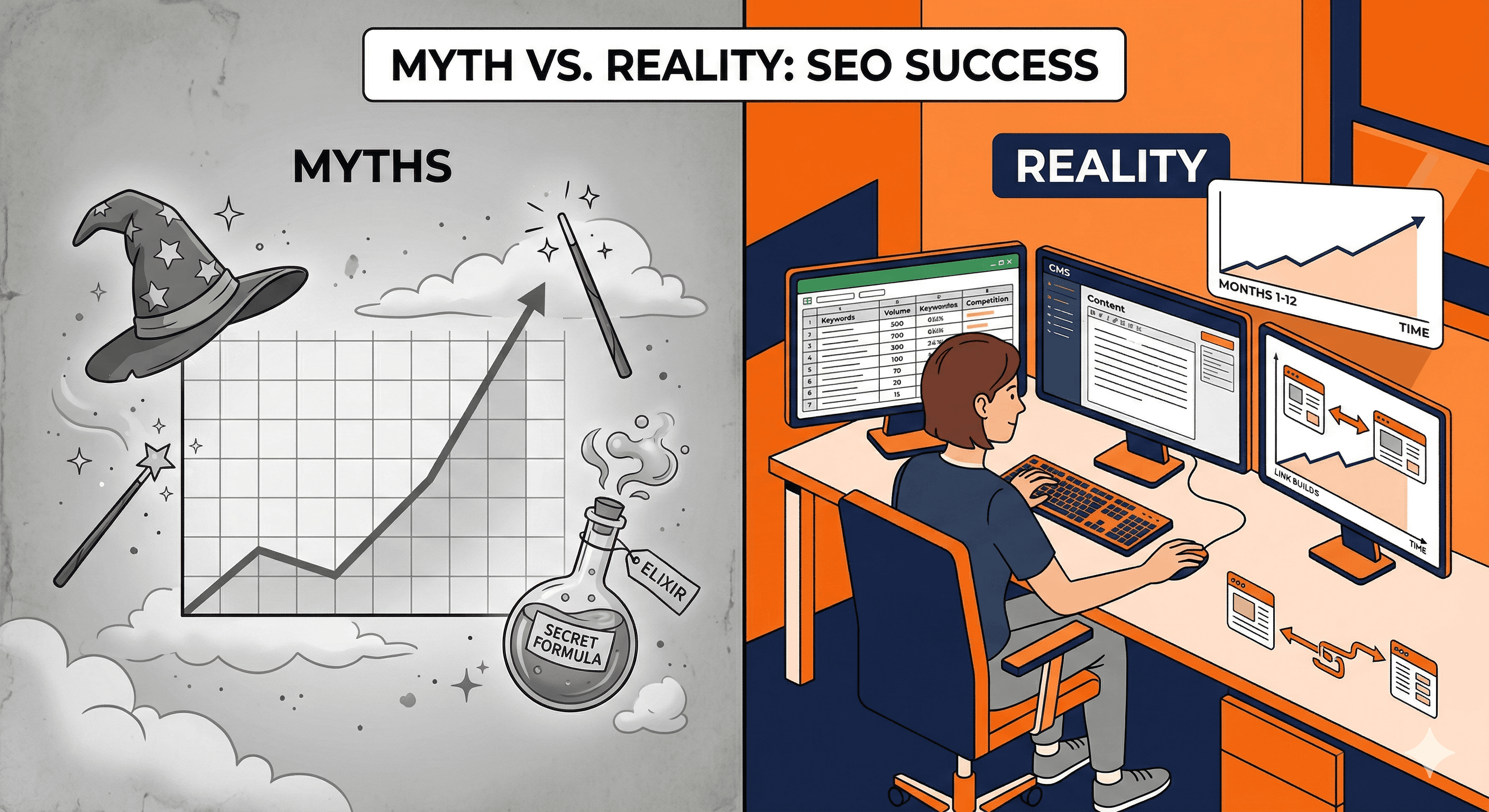
Search engine optimization has a reputation problem. Small business owners either think it is magic that will instantly flood their website with customers, or they think it is a scam that does not work at all. The truth is somewhere in the middle, and understanding it can save you thousands of dollars and months of wasted effort.
Myth: SEO Is a One-Time Project
SEO is not something you do once and forget about. It is an ongoing process. Google updates its algorithm hundreds of times per year. Your competitors are publishing new content, earning new backlinks, and optimizing their pages. If you stop, they pass you.
The reality is that SEO is more like exercise than surgery. Consistent, moderate effort over time produces better results than one intense burst followed by nothing.
Myth: You Need to Rank #1 for Everything
Ranking first for "restaurant" is nearly impossible and probably not useful anyway. Ranking first for "best Italian restaurant in downtown Columbus" is achievable and directly brings in customers who are ready to buy.
Small businesses should focus on long-tail keywords: specific phrases that match what their actual customers search for. Our keyword research guide shows you how to find them. These keywords have less competition and higher conversion rates. One powerful tactic is targeting queries that trigger featured snippets, which can put your business at the very top of the results page even above the first organic listing.
What Actually Works
The fundamentals have not changed much in a decade. We cover them all in our complete SEO guide. Create genuinely useful content that answers questions your customers ask. Make sure your website loads fast, works on mobile, and is easy to navigate. Claim and optimize your Google Business Profile. Get listed in relevant local directories. Earn links from local organizations, industry publications, and business partners.
None of this is glamorous. None of it produces overnight results. But it works, and the results compound over time.
What Does Not Work
Stuffing keywords into every sentence. Buying hundreds of low-quality backlinks. Duplicating the same page for every city you serve with only the city name changed. Hiding text on your page. Using automated content that reads like it was written by a robot.
These tactics might have worked in 2010. Today they will get your site penalized or ignored entirely.
How Long Does SEO Actually Take?
One of the most common questions small business owners ask is how long it takes to see results from SEO. The honest answer is three to six months for noticeable improvement, and six to twelve months for significant results. This assumes you are consistently publishing quality content, maintaining your Google Business Profile, and building relevant links.
Some improvements happen faster. Fixing technical issues like broken links, missing meta descriptions, or slow page speed can produce ranking improvements within weeks. If your site is not showing up at all, our guide on why your small business website is not showing up on Google walks through the most common causes and fixes. Local SEO efforts like optimizing your Google Business Profile and getting listed in relevant directories can show results within one to two months for businesses in less competitive markets. Our local SEO starter guide walks through these steps in detail.
The important thing to understand is that SEO results compound over time. A blog post you publish today might not rank well for three months, but once it does, it can continue bringing in traffic for years with minimal additional effort. That compounding effect is what makes SEO one of the highest-ROI marketing channels for small businesses.
DIY SEO vs Hiring an Agency
Many small business owners wonder whether they should handle SEO themselves or hire a professional. Both approaches can work, but the right choice depends on your situation.
DIY SEO makes sense if you have time to learn the basics, your industry is not highly competitive, and you are willing to invest a few hours per week over several months. There are excellent free resources from Google, Moz, and Ahrefs that can teach you the fundamentals. Start with Google's own Search Central documentation and the Moz Beginner's Guide to SEO.
Hiring an agency or consultant makes sense if your time is more valuable than the cost of professional help, if you are in a competitive industry, or if you have tried DIY and are not getting results. Expect to pay between $500 and $2,000 per month for quality small business SEO services. Anything significantly cheaper than that should raise questions about the quality of work. For a detailed look at pricing tiers and what you get at each level, read our breakdown of how much SEO costs for a small business.
Red Flags When Hiring an SEO Company
The SEO industry has more than its share of bad actors. Here are warning signs that an SEO provider is not worth your money. They guarantee first-page rankings or specific positions in search results. No one can guarantee that because Google's algorithm is not something anyone controls. They are vague about what they actually do each month. A good SEO provider should give you clear, specific reports showing the work they performed and the results it produced.
They use phrases like "proprietary methods" or refuse to explain their strategy. Legitimate SEO is not secret. It is well-documented, and any good provider should be happy to explain their approach. They promise results in weeks instead of months. If someone tells you they can get you to page one in 30 days, they are either lying or using tactics that will eventually get your site penalized.
They focus exclusively on rankings instead of business outcomes. Rankings matter, but what really matters is whether SEO is bringing in customers. Good providers track leads, phone calls, and revenue alongside ranking positions.
Getting Started with SEO Today
If you are just beginning with SEO, here is a simple starting point. First, claim and fully complete your Google Business Profile. This is the single highest-impact action you can take for local visibility. Add your business hours, photos, services, and a thorough description. Second, make sure your website loads in under three seconds and works well on mobile phones. Use Google PageSpeed Insights to check. Third, identify five to ten questions your customers frequently ask and write a helpful blog post or page answering each one. Fourth, get listed in the top five directories relevant to your industry. Finally, ask your satisfied customers to leave Google reviews.
That is enough to get meaningful traction. You do not need to do everything at once. Start with the basics, be consistent, and build from there.
The Bottom Line
SEO for small businesses is straightforward. It is not easy, and it is not fast, but it is not complicated. Focus on your customers, create content they find valuable, keep your website technically sound, and be patient. It is also worth paying attention to new search surfaces beyond Google. AI tools like ChatGPT and Perplexity are increasingly sending traffic to websites, and you can learn how to track your business visibility in ChatGPT and Perplexity to measure this emerging channel. Whether you handle SEO yourself or hire help, the principles are the same. The businesses that do this consistently are the ones that dominate local search results and turn organic traffic into real revenue.